
Soil sampling: Before the implementation of the experimental treatments, we described the soil profiles and quantified the soil nutrient status for macro and micro-nutrients. These measurements have been done in a comparative way in all plots. Several follow up soil samplings have been carried out. (PhD Marleen Vos: de Vos et al. 2023a, de Vos et al. 2023b)

Tree sampling: During the implementation of the forest experiment in February / March 2019, we have sampled 15 trees per species to quantify their above-ground biomass and nutrient distribution. (PhD Marleen Vos: de Vos et al. 2023a, de Vos et al. 2023b).
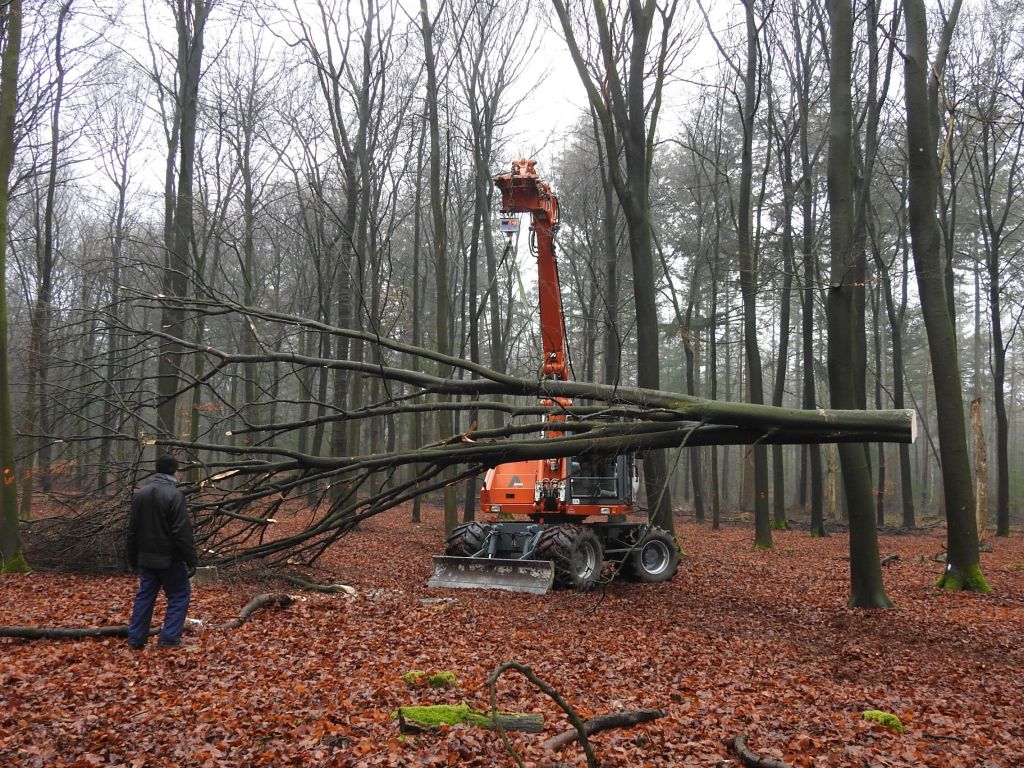
Leaching sampling. We quantified leaching over all treatment combination for a full year. Numerous rhizons were installed to collect water from around 60 cm depth in the soil. Samples were taken every month over a full year (April 2021 – April 2022). Samples were analysed for nutrient concentration of all macro and micro-nutrients. With the help of a model, I could thus show how much nutrients were lost by leaching over a full year, and how particularly the effects of harvest intensity on forest structure determined those loss rates. (PhD Marleen Vos).
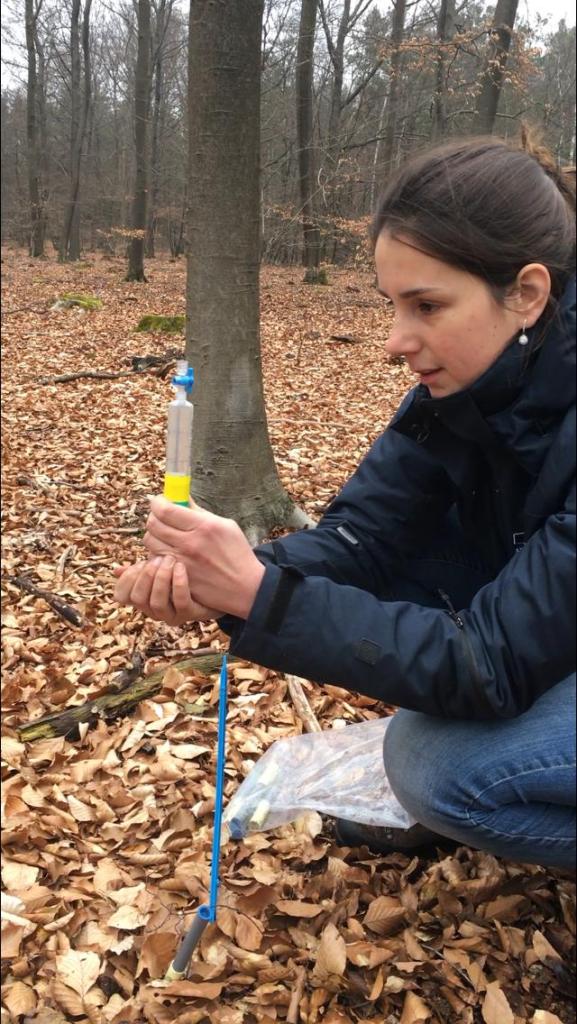
Terrestrial LiDaR: We quantity the 3D forest structure in all 15 experimental forest plots using LIDAR. We aim at repeating these measurements over time to monitor the dynamics in forest structure, including the development of the regeneration in the forest understory. (PhD Eva Meijers).

Dendrometers and soil sensors. From 2022 onwards, we have equipped trees with dendrometers to follow their stem growth and stem shrinkage, the latter being a proxy for tree dehydration. We also connected soil water potential sensors to each of those trees to link tree responses to soil moisture. (PhD Eva Meijers)

Soil moisture. During the hot and dry summer months of 2022, we quantified the spatial distribution of soil moisture in relation to density-dependent forest structural elements derived from the LiDaR scans (MSc Roos Groenewoud and PhD Eva Meijers). Soil moisture measurements were done using a TDR sensor along 80m transects.
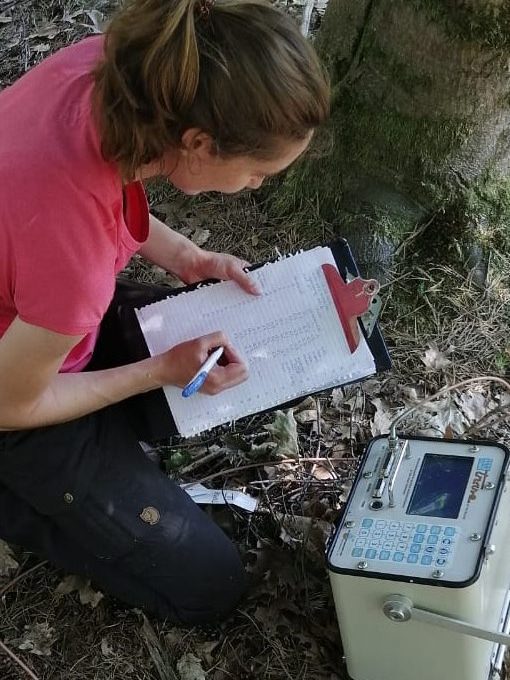
Light measurements. During the summer of 2022, we investigated the temporal and spatial differences in light conditions between and in our density plots. We used Hobo pendant sensors on sticks along the same transect as the soil moisture measurements to couple data.

Microclimatic measurements. We measure meteorological differences between the research locations and within the densities per species.
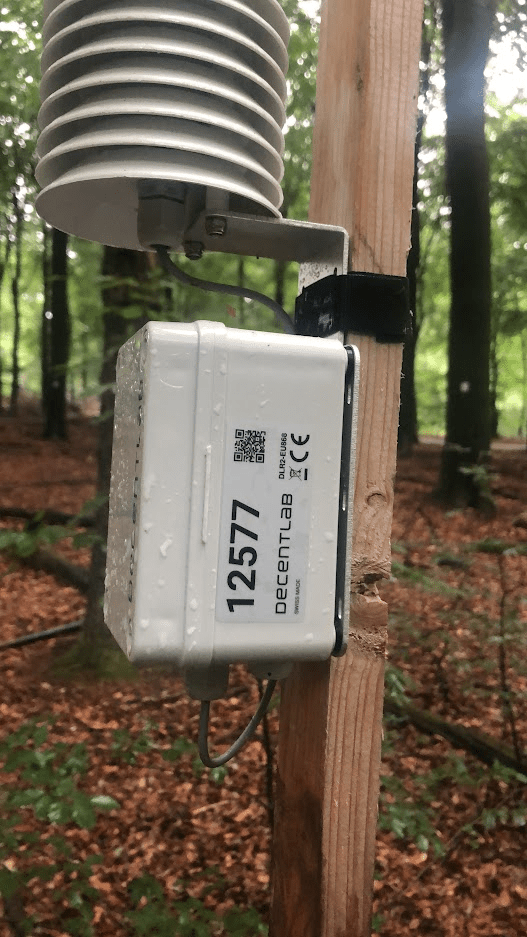
Satellite monitoring. We link levels of canopy disturbance to satellite-based radar time series. Our aim is to develop and test detection methods, which can be used to now-cast forest disturbances at European scale in the future (PhD Sietse van der Woude).

Mechanistic forest model. We are developing a 3D forest model that is able to predict the impact of management interventions under future climatic conditions, especially in increasingly hot and dry summers. To make sure the model gives a reliable prediction, we make a virtual replicate of our experimental forests and validate the growth of the virtual trees to the growth of the real trees, measured using the dendrometer and tree rings.(PostDoc Jorad de Vries)

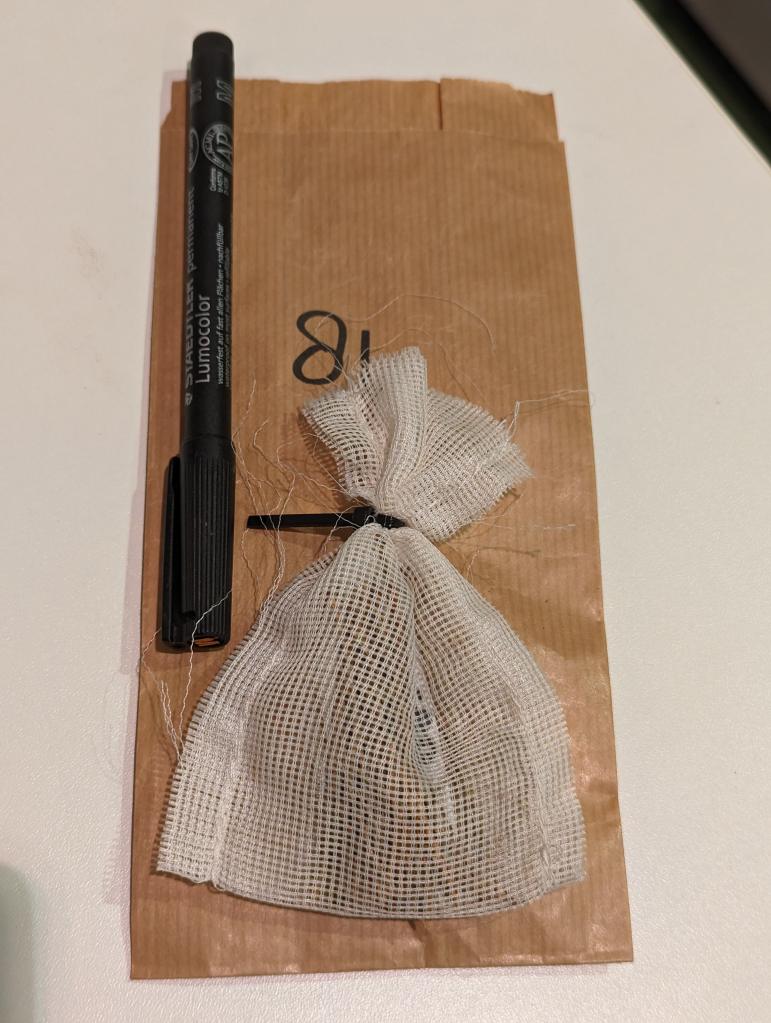
Fungal in-growth bags. In 2021, we quantified active mycorrhizal biomass at tree and stump positions across the different harvest treatments. Bags made of a very fine cloth filled with pure sand (which prevent the in-growth and establishment of roots and non-mycorrhizal fungi) were incubated in the soil for several months. Fungal biomass was estimated using ergosterol. (PhD Steven de Goede)

Soil microbial community composition. For several parts of the project, DNA has been isolated from mineral top soil and has been sent out for Illumina sequencing. Bacterial community composition is analyzed with 16S and fungal communities with ITS2. We zoom in on differences between saprotrophic and (ecto)mycorrhizal fungal communities and their relation with soil carbon cycling. (PhD Steven de Goede)

Soil fauna. A selection of Scots pine sites is incorporated within the SOB4ES project [link https://sob4es.eu/], in which a large number of soil properties are determined. This includes an assessment of the abundance and composition of soil fauna such as earthworms, pot worms, nematodes, mites, and springtails. (PhD Steven de Goede)

Drone multispectral & hyperspectral and thermal imaging. We will measure diel and seasonal patterns in tree crown reflectance and temperature using UAV-derived (1) hyperspectral, (2) multispectral and (3) thermal imaging to link changes in canopy indices and temperature (as proxies for tree responses to drought) to the individual water status information of trees equipped with dendrometers and soil water sensors. (PhD Arjen de Jonge)

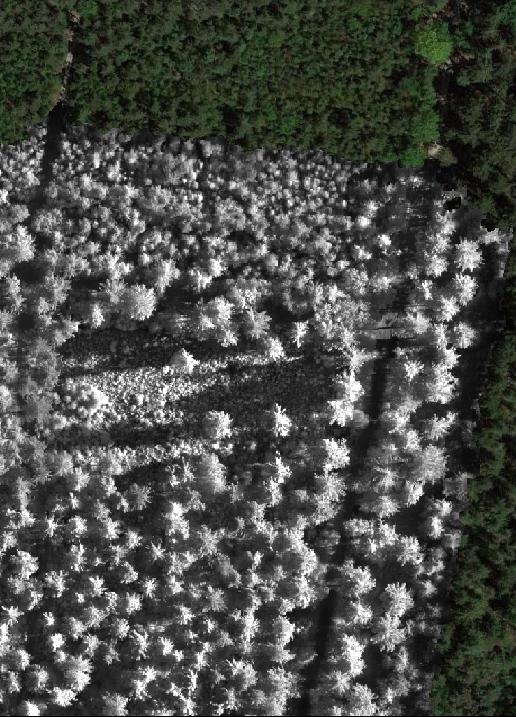
Canopy sampling and leaf water pressure. In 2024, we will sample leaves for leaf water potentials using a canopy sampler (DeLeaves) connected to a drone. This data will be connected to the thermal imagery data, chlorophyll data, and dendrometer data.
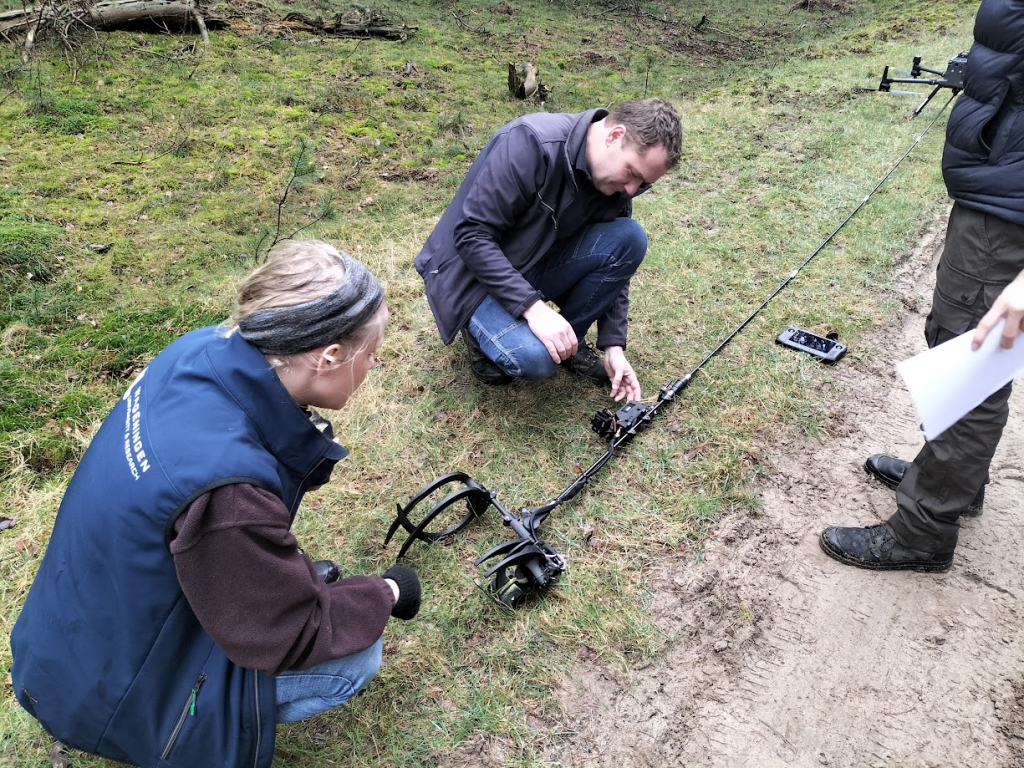
Leaf water potentials. (MSc David Pacuk)
We measure leaf water potentials at pre-dawn and midday on pot trees leaves along an experimental temporal drought gradient. In addition, we test differences in recovery capacities.

A/Ci curves with LiCoR-6400. (MSc David Pacuk). We measured A/Ci curves on all pot trees prior, during, and post temporal drought gradient to test for plant stomatal adaptation.

Rainfall exclusion. In the summer of 2022, rainout shelters have been installed in all Scots pine plots to simulate an intense drought event. Several soil-related measurements have been done before, during and after the drought, mostly connect to (functional) changes in microbial communities and organic matter decomposition. (PhD Steven de Goede)
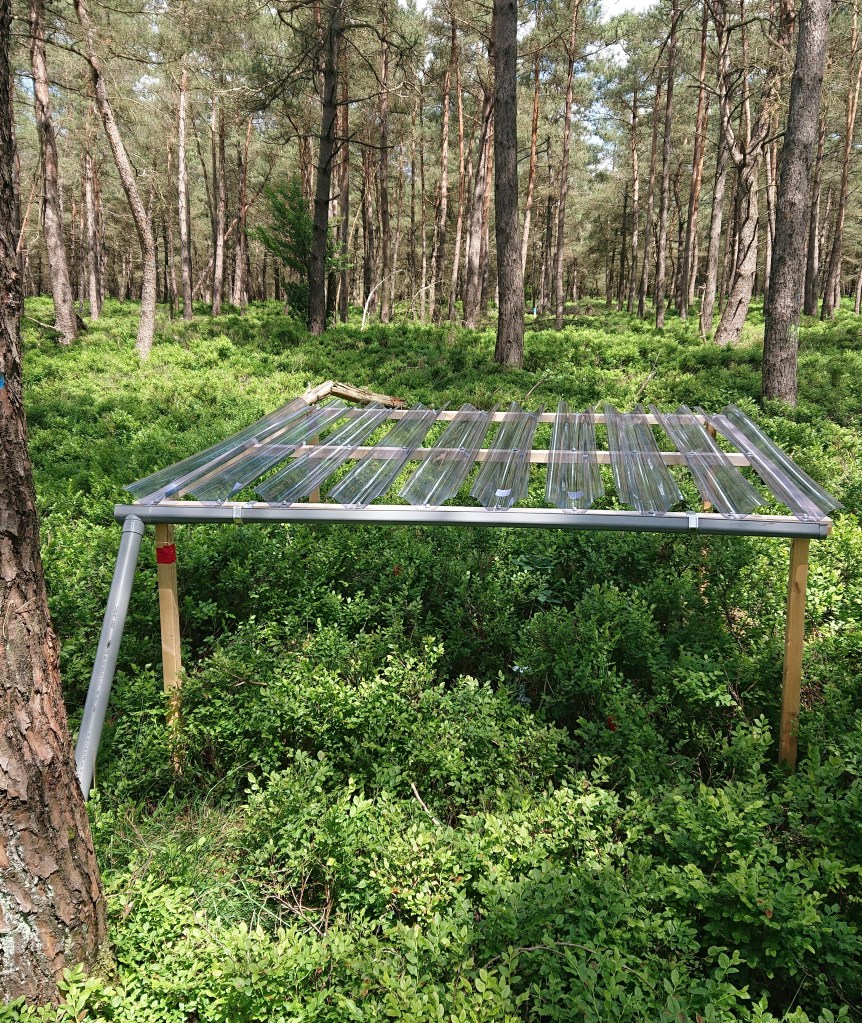
Litter bags. Within the rainfall exclusion experiment, litter bags filled with Scots pine needles have been placed on the litter layer. With a sequential design, we follow how litter decomposition rate changes over time, related to the simulated drought. (PhD Steven de Goede).
Soil respiration rate. Throughout the growing season, drought and control plots of the rainfall exclusion experiment have been re-measured for the emission of CO2 from soil. In cooperation with HoliSoils [link https://holisoils.eu/], a selection of Scots pine plots is measured biweekly for autotrophic and heterotrophic respiration following trenching (Sara Filipek, WENR).

Tree rings. Twenty trees will be sampled per hectare for tree ring width analysis. We will investigate the pre-thinning and post-thinning responses to drought years. Data will be linked to dendrometer data. (MSc Zeno Corazza, MSc David Pacuk, PhD Eva Meijers).

Deposition sampling: I develop a new method to effectively collect deposited nutrients just above the forest floor within each of harvest intensity treatments in all 15 forest plots. I sampled deposition every three month so in total 4 times (corresponding with spring, summer, fall and winter) over the year. From this, I calculated the amount of deposition for all macro and micro nutrients in relation to harvest intensity, and could show how such deposition decreased with harvest intensity, with some differences between species. (PhD Marleen Vos)
 Climate Smart Forestry